A boom lift leaking hydraulic fluid needs attention, even when the drip looks small. Everything on an aerial lift that moves under load moves on hydraulics: the boom, the jib, the platform rotation, the steering, and on many units the drive. So a puddle under the turntable or a wet cylinder is never something to shrug off. Most leaks come from a short list of places, and finding which one tells you a lot about the repair.
First, make it safe
Before anyone goes looking for the source:
- Bring the platform all the way down and stow the boom.
- Shut the machine off.
- Keep hands away from any line that is spraying or misting. Fluid under pressure can go through skin, and a pinhole leak can do it without looking like much. Use a piece of cardboard to find a pinhole, never a finger.
- If fluid is on the deck or the ground, soak it up so nobody slips and so a fresh drip is easy to see.
If the lift will not come down normally, do not keep cycling the controls. Use the emergency lowering the way the operator’s manual describes, and call us.
Where hydraulic leaks usually start
Hoses and fittings
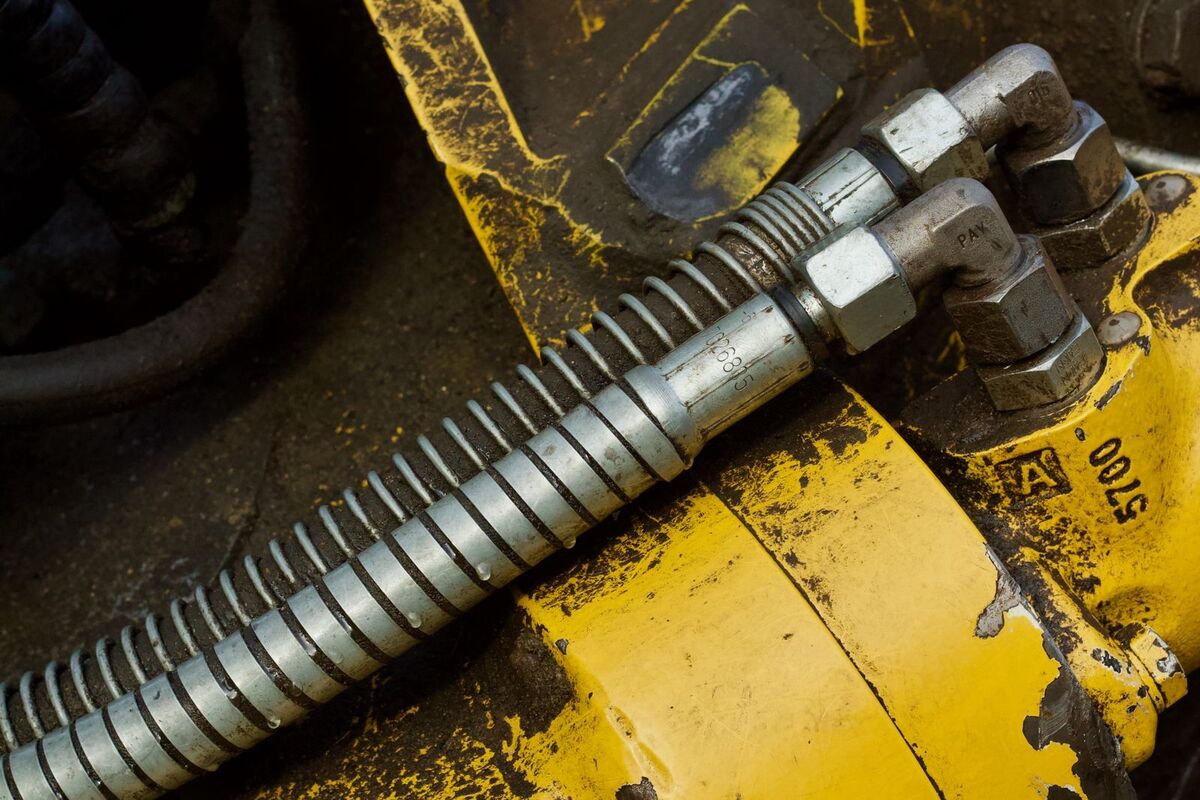
This is the most common source. Hoses rub against the boom or chassis as the machine works, the outer cover wears through, and the hose starts to weep. Fittings can loosen with vibration, or an O-ring at a fitting goes hard and stops sealing. Signs: a wet hose, a dark crusty spot where dirt has stuck to fluid, or a drip that lines up with a connection.
Replacing a hose is often a straightforward repair, as long as the replacement is the right one. Hose size, pressure rating and fitting type all have to match what the manufacturer specified for that spot on that model.
Cylinder seals
Every cylinder on the lift (lift, extend, steer, jib, and so on) has seals where the rod comes out of the barrel. When those seals wear, you see fluid on the rod, a wet ring at the end of the barrel, or a drip that shows up after the boom has been raised. A scratched or pitted rod will tear new seals quickly, so the rod gets checked too.
Seals inside the cylinder can also wear. That kind of leak does not drip on the ground. It shows up as drift: the boom or platform slowly creeping down or in while the controls are off. Drift is a safety problem, and the machine should not be used until it is found and fixed. A cylinder rebuild is usually the repair for both kinds of seal wear.
Pump, valves and the tank
Leaks at the pump, the valve block or the hydraulic tank are less common but harder to spot, because fluid runs down and collects somewhere lower. Overfilling the tank can also push fluid out of the breather and look like a leak. On electric units, a leaking pump can sit right next to the batteries, which is worth knowing when you clean up.
How to tell where it is really coming from
Fluid runs downhill and sticks to dirt, so the wet spot you see is often below the actual leak. A simple way to find it:
- Clean the area with a degreaser and a rag until it is dry.
- Run the function that seems to cause the leak, a few short cycles, with nobody in the platform.
- Look for the first place fluid reappears. That is the source, or close to it.
- Check the fluid level in the tank and note how much it dropped.
Take a photo or two of what you find. When you call, those photos help us show up with the right hose, fitting or seal kit instead of finding out on site.
When the lift needs to come out of service
Some leaks are a slow weep you can watch for a day while a repair gets scheduled. Others mean the machine should be tagged out now. Stop using the lift if:
- Fluid is spraying, misting or running, not just seeping.
- The boom, jib or platform drifts with the controls off.
- A hose is bulging, kinked, or worn through to the reinforcement.
- The tank level drops noticeably during a shift.
- A cylinder rod is scored, bent or pitted.
Any of those is worth a call that day. We offer 24/7 emergency service for lifts that are down.
What the repair usually involves
Our hydraulic work on aerial lifts covers cylinder rebuilds, pump repairs, hose replacements and full system diagnostics. On most leaks, we find the source, replace the failed hose, fitting or seal kit with the correct OEM part, top off with the fluid the manufacturer calls for, and run every function to make sure the leak is gone and nothing drifts. We can do that work on-site at your jobsite, yard or warehouse, or in our shop.
We repair JLG, Genie and SkyJack lifts and source their OEM parts ourselves. The hydraulic repair section on our services page has the full list.
Get a leaking lift looked at
Call us at (832) 302-0792 or send a service request with the make, model, where the unit is, and a photo of the leak. Our article on what to have ready when your lift is down lists everything that helps us get there with the right parts. And if your unit is coming up on its yearly check, here is how the annual lift inspection works in Texas.